Veterinary ultrasound is, today, one of the most useful and widely used diagnostic imaging tools in companion animal practice. It allows us to see inside your pet's body in a non-invasive and painless way, without surgery or radiation, and it provides extremely valuable information for detecting problems early. In this article we explain, in simple terms, what it is exactly, how it differs from echocardiography and why your vet may recommend it.
At our clinic in Somo we have high-resolution technology, within our specialty of veterinary ultrasound and cardiology, to offer a precise diagnosis that is comfortable for the animal.
What is a veterinary ultrasound?
Ultrasound is a diagnostic imaging technique that uses ultrasound waves, that is, high-frequency sound waves that the ear cannot perceive. A small device called a probe or transducer emits these waves, which bounce off the internal organs and return to the equipment, which transforms them into a real-time image displayed on a screen.
The most important thing for owners to understand is that this is a painless and safe test: it uses no radiation (unlike X-rays), it does not require surgery and, in most cases, it does not even need sedation. The animal only has to lie still and calm for a few minutes while the vet slides the probe over its skin.
What can it show?
Unlike an X-ray, which mainly shows bones and outlines, ultrasound makes it possible to assess the interior of soft organs: their size, their shape, their texture and their internal structure. That is why it is so useful for examining the liver, the kidneys, the bladder, the spleen, the intestine or the reproductive system, among others.
Abdominal ultrasound and echocardiography: how are they different?
Although both tests are based on the same ultrasound technology, they do not examine the same thing. Abdominal ultrasound focuses on the organs of the abdomen, while echocardiography is the specific ultrasound of the heart. It is important not to confuse them, because they address different needs.
| Abdominal ultrasound | Echocardiography (heart ultrasound) |
|---|---|
| Evaluates the organs of the abdomen: liver, kidneys, bladder, spleen, pancreas, intestine and reproductive system. | Evaluates the heart: the size of its chambers, the thickness and movement of the walls and the functioning of the valves. |
| Detects cysts, masses, stones, abdominal fluid, inflammation or changes in the structure of the organs. | Detects heart diseases such as valve insufficiencies, dilations or alterations of the heart muscle. |
| Usually requires prior fasting and, sometimes, shaving the belly area. | Normally does not require fasting; a small area of the chest is shaved to rest the probe properly. |
| Indicated for vomiting, diarrhea, weight loss, changes in urination or internal medicine check-ups. | Indicated for heart murmurs, coughing, fatigue, difficulty breathing or as a check-up in older pets. |
What are they for and what do they detect?
Abdominal ultrasound helps the vet investigate the origin of many digestive and urinary symptoms. For example, it is a key element in the study of kidney disease in cats, as it makes it possible to observe the size and structure of the kidneys. It is also very valuable when non-specific signs appear, such as those described in the signs that a cat is sick: lethargy, loss of appetite or unexplained weight loss.
Echocardiography, for its part, is the reference test for studying the heart. It allows the veterinary cardiologist to see the organ beating live, measure its structures and assess blood flow. Thanks to it, heart diseases can be diagnosed and monitored, many of them common in pets entering their older years, as part of senior pet care.
What is the test like, step by step?
One of the great advantages of ultrasound is how well tolerated it is. Even so, it helps to know how it works so you arrive prepared and your pet is as comfortable as possible.
Prior preparation
For an abdominal ultrasound, prior fasting of several hours is usually requested. The reason is simple: if the stomach and intestine are full of food or gas, they make it harder to see the organs. For echocardiography, on the other hand, fasting is not usually necessary. In both cases, it is almost always necessary to shave a small area of hair, because the air left between the hairs prevents the ultrasound waves from passing through correctly. Don't worry: the hair grows back normally.
During the examination
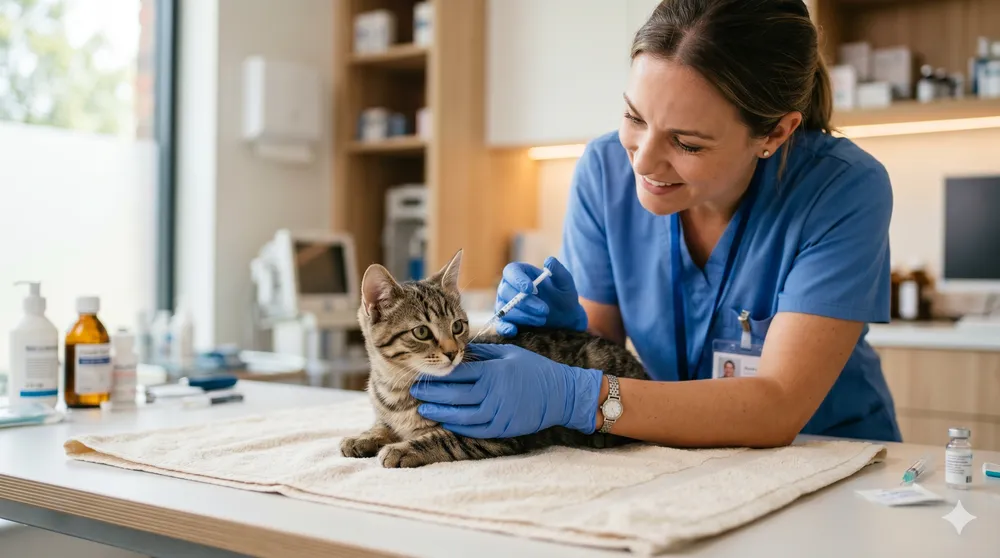
The animal is placed lying down, usually on its back or on its side, on a comfortable surface. A warm gel is applied to the skin to improve contact with the probe, and the vet gently slides it while watching the images on the screen. It is a quick test, it causes no pain, and most pets tolerate it awake with a little patience and affection. Only in specific cases, if the animal is very nervous, may light sedation be considered.
When does the vet recommend it and what are its advantages?
The vet usually recommends an ultrasound when they need to confirm or rule out a diagnosis, follow up on an already known disease or investigate the origin of certain symptoms. It is a regular part of the work of veterinary internal medicine, where it is combined with the physical examination and lab tests to obtain a complete picture of the animal's health.
Its great advantage is that it provides a huge amount of information in a fast, safe and painless way, observing the organs in motion and in real time, without radiation and without surgery. That is why it is especially useful in delicate situations. If your pet shows any of the signs of a veterinary emergency, such as a swollen abdomen or difficulty breathing, ultrasound can be decisive in making quick decisions.
Frequently asked questions
Does the ultrasound hurt my pet?
No. Ultrasound is a completely painless and safe test that uses no radiation. The animal only feels the contact of the probe and the gel on the skin, and most pets tolerate it perfectly while awake.
Why does my pet have to be shaved?
Hair traps air between the strands, and that air prevents the ultrasound waves from passing properly into the body. That is why a small area is shaved, which makes it possible to obtain a clear image. It is temporary: the hair grows back normally.
Is an ultrasound the same as an echocardiography?
Not exactly. Both use ultrasound waves, but an abdominal ultrasound examines the organs of the abdomen and echocardiography is the specific ultrasound of the heart. Your vet will tell you which one your pet needs depending on its symptoms.
Trust your pet's diagnosis to our team in Somo
If your vet has recommended an ultrasound or you notice any change in your pet, at Clínica Veterinaria Somo, in Cantabria, we have high-resolution equipment and a caring, rigorous approach. Book your appointment through our contact page or call us at 942 51 00 66 and we will answer all your questions.